

Blogs
Complete Guide to Door Seals: Types, Benefits & How to Choose the Right One
Aug
Doors are one of the biggest sources of unwanted air leaks, dust, insects, rainwater, and outside noise. Even a small gap around a door can increase energy bills, reduce indoor comfort, and allow pests to enter your home or office.
A door seal is a simple yet highly effective solution that closes these gaps, improves insulation, and protects your property from the elements. Whether you’re sealing your front door, an interior door, or an exterior door, choosing the right type of seal can make a significant difference.
This guide explains everything you need to know about door sealing strips, their types, materials, benefits, and how to choose the best option for your needs.
What Is a Door Seal?
A door seal is a strip made from flexible materials such as rubber, silicone, foam, or brush fibers that is installed around or beneath a door to close unwanted gaps.
Also known as a door sealing strip or door weather seal, it helps create a tighter barrier between indoor and outdoor environments.
Door seals are commonly installed on:
- Front doors
- Main entrance doors
- Bedroom doors
- Bathroom doors
- Kitchen doors
- Garage doors
- Office doors
- Commercial buildings
Why Door Seals Are Important
Installing a quality door weather seal offers several benefits.
Blocks Dust
In dusty environments, especially in Pakistan, dust easily enters through small gaps around doors. Proper sealing significantly reduces indoor dust accumulation.
Stops Insects
Door seals help prevent ants, mosquitoes, cockroaches, spiders, and other insects from entering your home.
Improves Energy Efficiency
Air leaks force air conditioners and heaters to work harder. A properly sealed door reduces energy loss and helps maintain indoor temperatures.
Reduces Noise
Rubber and silicone door seals absorb sound vibrations and minimize outside noise.
Prevents Water Entry
Exterior door seals help block rainwater from entering during storms.
Improves Comfort
By eliminating drafts, rooms remain more comfortable throughout the year.
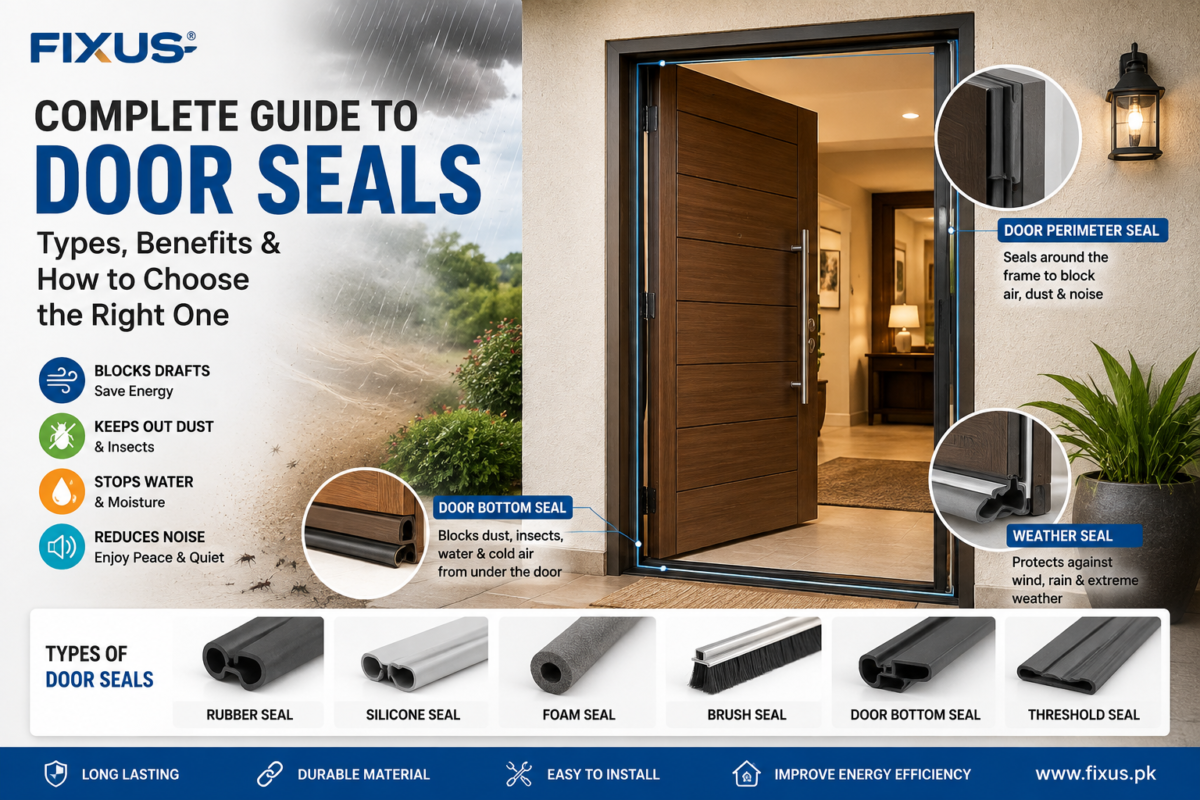
Types of Door Seals
Different doors require different sealing solutions.
Door Bottom Seals
Installed underneath the door.
Best for:
- Dust
- Air drafts
- Insects
- Rainwater
Common materials:
- Silicone
- Rubber
- PVC
Door Perimeter Seals
Installed around the frame of the door.
Ideal for:
- Front doors
- Exterior doors
- Main entrance doors
They create an airtight seal when the door closes.
Foam Door Seals
Made from soft closed-cell foam with adhesive backing.
Best for:
- Small gaps
- Windows
- Interior doors
Advantages:
- Affordable
- Easy installation
- Good insulation
Rubber Door Seals
Usually manufactured using EPDM or natural rubber.
Advantages:
- Long lifespan
- Excellent flexibility
- UV resistant
- Weather resistant
Suitable for both residential and commercial applications.
Silicone Door Seals
Silicone remains flexible even in extreme temperatures.
Benefits include:
- Waterproof
- Durable
- Easy to clean
- Excellent weather resistance
Ideal for bathrooms, kitchens, and exterior doors.
Brush Door Seals
These contain densely packed nylon or polypropylene bristles.
Perfect for:
- Sliding doors
- Rolling shutters
- Warehouse doors
- Dust protection
Exterior Door Seal vs Interior Door Seal
Exterior Door Seal
Designed to withstand:
- Sunlight
- Rain
- Wind
- Temperature changes
Typically made from:
- EPDM rubber
- Silicone
- Heavy-duty PVC
Interior Door Seal
Designed primarily for:
- Noise reduction
- Privacy
- Dust control
Usually uses:
- Foam
- Rubber
- Brush materials
Front Door Seals
Your front door seal protects the main entrance of your home.
A quality front door seal should:
- Stop outdoor dust
- Prevent insects
- Block rainwater
- Reduce energy loss
- Improve indoor comfort
Since front doors experience frequent use, durability is especially important.
Common Door Seal Materials
EPDM Rubber
Advantages:
- Extremely durable
- UV resistant
- Flexible
- Long service life
Ideal for exterior installations.
Silicone
Advantages:
- Waterproof
- Heat resistant
- Flexible
- Long-lasting
Excellent for humid environments.
Foam
Advantages:
- Low cost
- Easy installation
- Good insulation
Best for small gaps.
PVC
Advantages:
- Economical
- Water resistant
- Lightweight
Commonly used for bottom seals.
How to Choose the Right Door Seal
Consider the following factors before purchasing.
Gap Size
Measure the gap between the door and frame.
Different seals are designed for different gap widths.
Door Location
Ask yourself:
- Is it an exterior door?
- Is it an interior door?
- Is it exposed to rain?
- Is it near a bathroom?
The environment determines the ideal material.
Material
Choose based on durability:
- EPDM → Long life
- Silicone → Waterproof
- Foam → Budget friendly
- Brush → Dust protection
Installation Method
Most modern door sealing strips feature self-adhesive backing for quick installation.
Others require screws for heavy-duty applications.
Signs Your Door Seal Needs Replacement
Replace your seal if you notice:
- Visible cracks
- Torn rubber
- Flattened foam
- Water entering
- Dust around the door
- Cold air drafts
- Increased outside noise
- Loose adhesive
Replacing worn seals restores insulation and improves comfort.
Installation Tips
For best results:
- Clean the surface thoroughly.
- Remove old adhesive.
- Measure accurately.
- Cut the seal to size.
- Apply evenly without stretching.
- Test door closing before trimming excess.
Proper installation ensures maximum performance and durability.
Common Mistakes to Avoid
Avoid these common errors:
- Buying the wrong size
- Ignoring gap measurements
- Installing on dirty surfaces
- Stretching adhesive seals
- Choosing indoor products for outdoor use
- Not replacing damaged seals promptly
Which door seal lasts the longest?
EPDM rubber and silicone seals generally offer the longest lifespan and excellent weather resistance.
Which door seal is best for dust?
Brush seals and silicone door bottom seals are among the most effective options for blocking dust.
Can I install a door seal myself?
Yes. Most self-adhesive door sealing strips can be installed in minutes using basic household tools.
Are door seals waterproof?
Many silicone, rubber, and PVC door seals provide excellent protection against rainwater and moisture.
Do door seals help reduce electricity bills?
Yes. By reducing air leakage, door seals improve insulation and help air conditioners and heaters operate more efficiently.
Final Thoughts
A quality door seal is one of the simplest and most cost-effective upgrades you can make to your home or workplace. Whether you need a door sealing strip for your front door, a durable exterior door seal, or an interior door seal to reduce noise and dust, selecting the right material and installing it correctly can significantly improve comfort, cleanliness, and energy efficiency.
Investing in the right door weather seal today can help protect your home from dust, insects, drafts, water, and unnecessary energy loss for years to come.
